
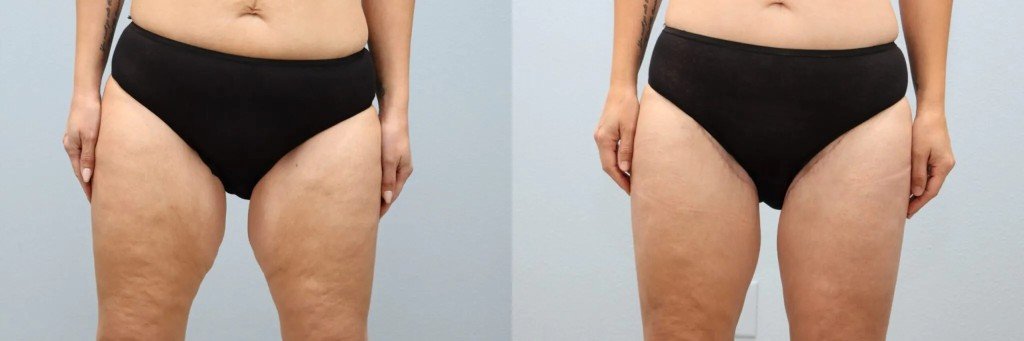
Thighplasty for firmer lower-extremity contour through medial or extended soft-tissue resection and fascial suspension.
The surgical correction of thigh contour, clinically identified as Thighplasty, represents a specialized intervention designed to address integumentary laxity and soft tissue redundancy in the lower extremities. This procedure is primarily indicated for patients experiencing significant “skin sag” due to massive weight fluctuations, chronological aging, or genetic predisposition to tissue inelasticity. The objective is the systematic removal of excess skin and underlying adipose tissue to restore a more youthful and firm appearance to the thighs. By meticulously managing the tension across the medial and lateral planes, surgeons can eliminate “chafing” and achieve a refined silhouette that aligns with the patient’s overall bodily proportions.
Thighplasty procedures integrate advanced excisional techniques with a sophisticated understanding of lower extremity anatomy and dermal elasticity dynamics. By strategically resecting redundant soft tissue and optimizing the medial or lateral contour, these interventions restore structural firmness and refine the crural silhouette. Each clinical strategy is meticulously tailored to ensure secure fascial suspension while achieving a resilient, symmetrical, and anatomically harmonious aesthetic transformation.
The technical execution of Thighplasty requires a detailed preoperative analysis of the degree of tissue descent and the quality of the dermal envelope. Depending on the extent of the deformity, surgical strategies vary from a Medial Thigh Lift—utilizing incisions hidden within the groin crease—to an Extended Thigh Lift for patients requiring more comprehensive circumferential remodeling. A critical component of the procedure is the secure fixation of the superficial fascial system (SFS) to the stable periosteal or ligamentous structures of the pelvic region, ensuring that the elevated tissue remains in its corrected anatomical position over time.
Lower Extremity Morphological Refinement
- Integumentary Tensioning and Suspension
- Systematic Adipose and Dermal Resection
- Functional and Aesthetic Contour Optimization
A comprehensive clinical evaluation is paramount to determine the optimal incision pattern that balances maximal tissue correction with minimal scar visibility. This ensures that the functional benefits, such as improved mobility, are achieved alongside aesthetic goals.
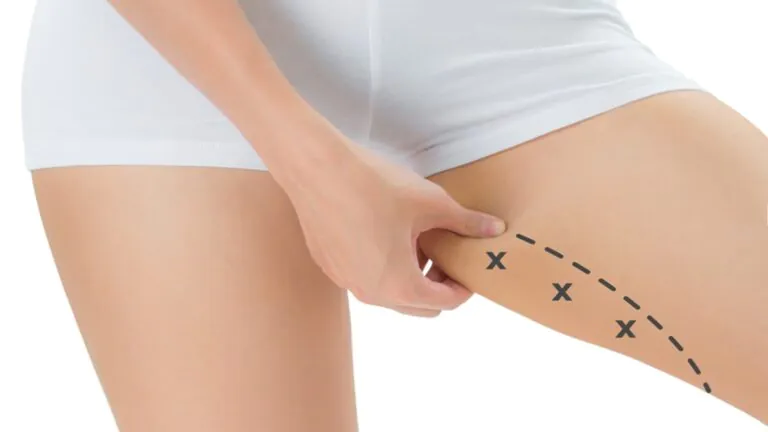
Woman grabbing skin on her Inner thigh with the black color crosses marking, Lose weight and liposuction cellulite removal concept, Isolated on white background.
5 Critical Aspects of Advanced Thighplasty
Clinical success in Thighplasty is predicated on the precise management of the lymphatic drainage system and the maintenance of venous return in the lower limbs. Current surgical research emphasizes the importance of preserving the deep lymphatic channels to minimize the risk of prolonged lymphedema or seroma formation. Furthermore, the integration of Liposuction-Assisted Thighplasty allows for the debulking of localized fat before skin excision, facilitating a more fluid transition and reducing the tension on the primary suture line. It is also vital to coordinate the recovery phase through specialized compression hosiery that manages interstitial fluid dynamics and ensures optimal tissue adherence during the initial healing phase.
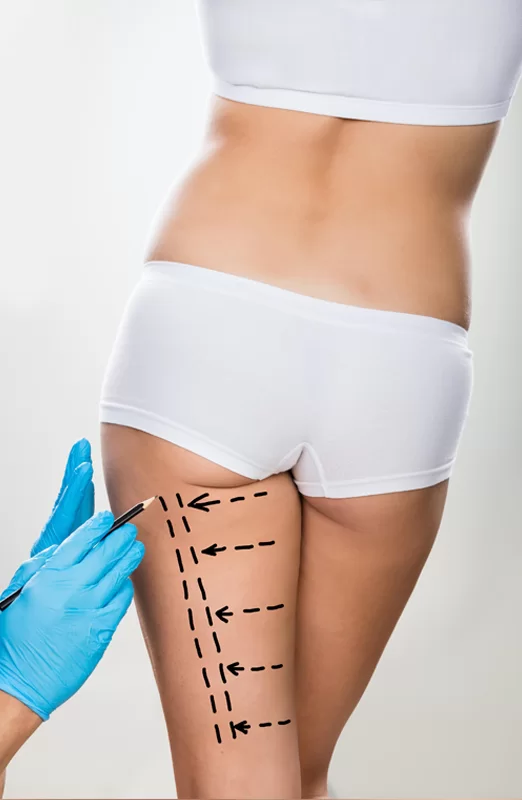
The synthesis of energy-based tissue tightening with excisional surgery represents a modern advancement in crural aesthetics. By utilizing technologies such as radiofrequency-assisted lipolysis (RFAL) in conjunction with Thighplasty, surgeons can enhance dermal contraction and achieve superior results in patients with borderline skin quality. This combined approach adheres to the principles of anatomical permanence and structural integrity, offering a bespoke solution for complex lower body requirements.